
Service Detail
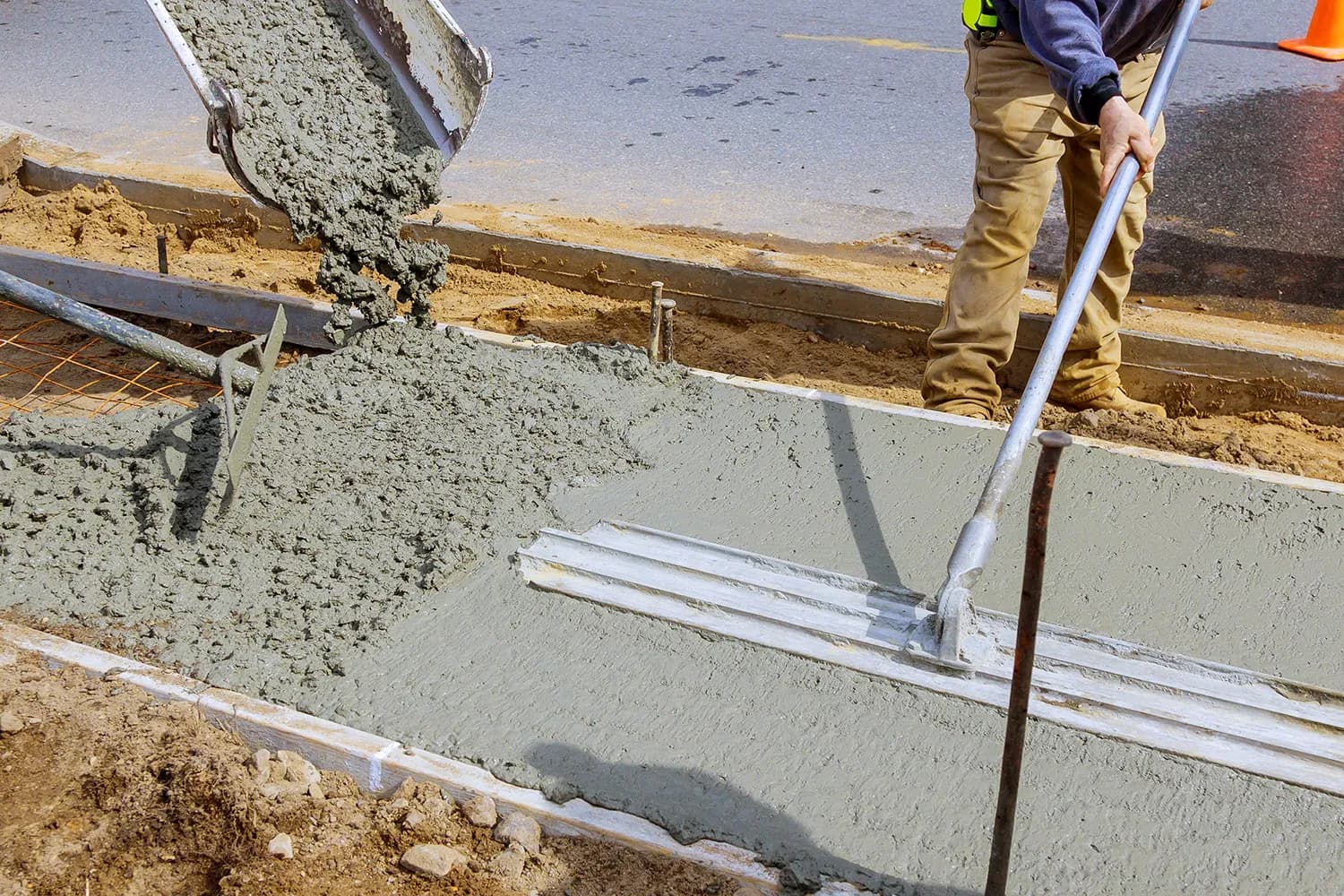
Commercial Concrete Paving In Grand Prairie, TX
Professional commercial concrete paving services for parking lots, warehouses, and industrial facilities. Durable, long-lasting solutions for heavy traffic areas. This page provides practical planning and delivery guidance for owners, developers, and facilities teams managing commercial concrete paving scopes in Dallas-Fort Worth.
Overview
Scope Highlights
Commercial Concrete Paving supports industrial and logistics concrete scopes. In this market, the strongest outcomes come from early constructability review, clear scope definition, and disciplined field execution. Owner teams typically use this scope in distribution buildings, warehouse expansions, manufacturing support spaces, industrial infill sites, where schedule certainty and long-term durability both matter for business continuity.
- Technical focus on durability under high cycle equipment traffic
- Preconstruction planning for slab and paving details that reduce long-term disruption
- Field coordination around civil and utility handoffs
- Risk controls including weather and schedule contingency planning
- Lifecycle planning for joint maintenance planning
- Documented turnover for ownership and facilities teams
Clear Scope Control
Detailed bid packages and constructability review reduce ambiguity before procurement and improve schedule predictability.
Operationally Aware Sequencing
Execution planning reflects active-site realities, including pre-pour embeds and penetrations and quality control checkpoints.
Quality-First Field Workflow
Placement and curing decisions are tied to weather and production risk, with emphasis on material availability and placement logistics.
Lifecycle-Oriented Handoff
Closeout documentation supports facilities teams with practical guidance around planned repair windows.
Process
Delivery Steps
Step 1
Scope Definition And Preconstruction Alignment
Define performance requirements, phasing constraints, and interfaces that affect commercial concrete paving so bid assumptions match real jobsite conditions.
Step 2
Engineering Review And Field Constructability
Coordinate drawings, details, and installation sequencing with focus on durability under high cycle equipment traffic and slab and paving details that reduce long-term disruption.
Step 3
Site Preparation And Trade Coordination
Confirm readiness for concrete work, including subgrade conditions, access management, and inter-trade dependencies before placement starts.
Step 4
Placement, Curing, And Quality Controls
Execute placements with weather-aware sequencing, hold-point inspections, and documented quality checks tied to project acceptance criteria.
Step 5
Turnover And Lifecycle Handoff
Deliver closeout records, maintenance-sensitive notes, and repair planning guidance for facilities teams and ownership stakeholders.
Applications
Project Types
Industrial slab replacement
Distribution center upgrades
Heavy-use paving and access work
Warehouse support improvements
Process area concrete scopes
Site modernization phases
Technical Guide
Commercial Concrete Paving Planning In DFW
This section is written for commercial owners, developers, and facilities teams that need detailed planning context before bidding and construction starts.
Commercial Concrete Paving Strategy For Commercial Owners In North Texas
Commercial Concrete Paving is usually not an isolated trade decision. In Dallas-Fort Worth, it sits inside a larger sequence that includes civil readiness, structural coordination, utility timing, and owner occupancy milestones. Successful teams treat this scope as part of the total project delivery path rather than a single installation event. That approach matters in Grand Prairie because schedules often overlap with active logistics corridors, constrained site access, and multiple inspection hold points.
Preconstruction quality is the biggest differentiator. A complete plan should identify exact work limits, drawing references, phasing boundaries, acceptable tolerances, and documentation standards before mobilization. For this scope, teams often gain predictability by focusing early on durability under high cycle equipment traffic, slab and paving details that reduce long-term disruption, and drainage and slope control for year-round operations. When those items are handled in advance, field crews can focus on production quality instead of emergency redesign decisions.
Engineering, Constructability, And Bid-Phase Alignment
Owners and developers usually get stronger bid outcomes when design intent is translated into constructable package language. That means adding practical field information such as staging assumptions, access windows, sequencing dependencies, and acceptance testing requirements. In concrete-heavy scopes, constructability failures are often traced to missing elevation controls, unclear handoff lines between trades, or late coordination of penetrations and embeds. These issues can be reduced with disciplined bid clarifications and early partner review.
For commercial concrete paving, the most durable procurement workflow is to align commercial terms with technical deliverables. The contract should state who provides survey control, who confirms subgrade acceptance, and how weather-driven sequencing changes are communicated. It should also define closeout expectations, including as-built records and maintenance notes for facilities teams. This structure turns technical decisions into enforceable project controls and protects both schedule continuity and budget reliability.
Field Execution Under Real DFW Conditions
North Texas placements are influenced by heat, wind, rain, and rapid forecast swings. Even when a schedule is fixed, daily execution plans should flex with weather and site logistics. Teams typically review discharge paths, finishing windows, curing protection, and truck routing at the start of each shift. That discipline is especially important for commercial concrete paving because placement quality and early-age performance are highly sensitive to timing, moisture management, and finishing consistency.
Operational coordination also matters. Many sites in this market are near active roads, occupied properties, or ongoing tenant operations. Practical risk control includes clear traffic separation, staged material delivery, and communication loops that keep superintendents, inspectors, and owner representatives aligned throughout each placement cycle. For this scope, reliable outcomes are usually tied to weather and schedule contingency planning, material availability and placement logistics, and inspection hold points before major pours rather than last-minute acceleration tactics.
Quality Control, Documentation, And Turnover
Quality control should be treated as a continuous workflow, not a final inspection event. Effective teams define hold points before work starts, then verify each critical condition in sequence: subgrade readiness, form and reinforcement placement, embed alignment, delivery conditions, and post-placement protection. For commercial concrete paving, consistency across these checks improves long-term performance and reduces early repair work. It also protects owner confidence when timelines are tight and downstream trades depend on stable surfaces or elevations.
Turnover quality is equally important for asset owners. Closeout packages should include approved submittals, key inspection records, mix and material data where required, and field notes on maintenance-sensitive areas. Teams that document these details at completion make it easier for operations staff to troubleshoot and plan routine upkeep. This is where lifecycle planning begins, not where construction ends, and it has direct impact on maintenance budgets over the first years of asset operation.
Lifecycle Performance And Facilities Planning
From a facilities perspective, concrete scopes should be evaluated on total operating impact, not only initial installation cost. A maintenance-first strategy considers access for future repairs, expected wear zones, joint service intervals, and procedures for protecting critical circulation routes during repairs. For commercial concrete paving in busy commercial properties, these planning choices can determine whether corrective work is routine and controlled or disruptive and expensive.
Facilities teams in Grand Prairie and DFW often benefit from a written post-turnover plan that includes inspection intervals, escalation triggers, and repair sequencing priorities. When ownership documents these practices early, the building team can coordinate future upgrades without repeating the same coordination effort each cycle. For this scope, practical lifecycle focus should include joint maintenance planning, planned repair windows, and future expansion tie-ins so operations remain stable as demand changes over time.
Pre-Bid Checklist
- Define exact scope limits and acceptance criteria for commercial concrete paving before procurement starts.
- Publish one coordination matrix for civil, structural, MEP, and specialty trade interfaces.
- Confirm benchmark elevations, access routes, and inspection hold points before each major placement.
- Assign stormwater, safety, and accessibility responsibilities in writing before mobilization.
- Set weather contingency rules for placement, curing protection, and sequencing updates.
- Document pre-pour and post-pour quality checks tied to durability under high cycle equipment traffic.
- Capture closeout records with maintenance notes so facilities teams can act quickly after turnover.
- Review lifecycle priorities around joint maintenance planning and planned repair windows.
Reference Sources
Standards and public resources used for the planning guidance on this page.
- OSHA Construction Standards (29 CFR 1926)
Federal construction safety requirements that influence site planning, access controls, and field operations.
- 2010 ADA Standards for Accessible Design
Accessibility requirements used when concrete routes, parking, ramps, and entries must meet ADA criteria.
- TCEQ Construction Stormwater Permit (TXR150000)
Texas construction stormwater permit guidance used for erosion controls and SWP3 planning on disturbed sites.
- TxDOT Standard Specifications
Texas transportation specifications often referenced for pavement materials, testing, and acceptance language.
- NWS Fort Worth Climate Data
Regional climate context used for scheduling pours, curing strategy, and weather contingency planning in DFW.
- USDA NRCS Web Soil Survey
Soils mapping and interpretation tools used during preconstruction review of subgrade and site drainage behavior.
FAQ
Frequently Asked Questions
How should owners plan bid packages for commercial concrete paving in Grand Prairie and DFW?
Start with a scope package that clearly separates civil handoff conditions, structural requirements, and acceptance criteria for commercial concrete paving. Include drawing references, specification sections, and milestone dates tied to your broader project schedule. For best results, align pre-bid questions around civil and utility handoffs and pre-pour embeds and penetrations so pricing covers the real field constraints instead of assumptions.
What technical issues create the most change orders on commercial concrete paving projects?
In North Texas, change orders often come from unclear subgrade readiness, late embed revisions, and incomplete utility coordination. For commercial concrete paving, risk is reduced when the pre-pour checklist includes benchmark elevations, penetration and anchor verification, and traffic control plans for concrete delivery. A documented QA plan before mobilization is usually more valuable than trying to correct details after placement.
How does weather affect commercial concrete paving scheduling in DFW?
North Texas weather can shift quickly between heat, wind, and heavy rainfall events, so placement windows should be reviewed daily. The practical approach is to tie mix strategy, crew sequencing, and curing protection to forecast changes rather than static dates. For commercial concrete paving, this usually means confirming pump access, water management, and protection plans before each major placement day.
What compliance items should be reviewed before mobilizing commercial concrete paving scopes?
Review municipal permit status, SWP3 responsibilities under Texas construction stormwater rules, and any ADA-related dimensional requirements that affect finished concrete. Safety planning should also align with applicable OSHA construction standards. On commercial concrete paving projects, the most reliable method is to publish one pre-mobilization checklist that assigns each compliance item to a responsible party and due date.
How can facilities teams protect long-term performance after commercial concrete paving completion?
Lifecycle value comes from maintaining joints, protecting high-wear traffic paths, and documenting repair procedures before problems are urgent. After commercial concrete paving handoff, keep closeout records organized by area so maintenance teams can act quickly when usage changes. Planning for joint maintenance planning and planned repair windows from day one helps avoid expensive operational disruption later.
Which project types most often require commercial concrete paving in this market?
Commercial Concrete Paving is frequently used on distribution buildings, warehouse expansions, manufacturing support spaces, industrial infill sites. In Grand Prairie and surrounding DFW markets, owners typically prioritize schedule reliability, durability under real traffic conditions, and clear documentation at turnover. When these priorities are built into preconstruction, the scope is easier to deliver without downstream rework.
Need a Service Proposal?
Share your project details and we can coordinate scope and next steps.